NEO: The Game – Origin – Update 1.33.0
Hello everyone,
This one is called Origin. It changes how a game of NEO begins. You arrive as a single cell in a soup. You eat, you spend DNA, you grow a body, you live on your home planet as that creature, and only then do you awaken into the Medieval Age. This is true for a new account and for an account that already had cities. Nothing you built is deleted: cities, ships, and research stay saved. You do not return to them until the creature age is finished. Until then you cannot build, research, recruit, or give ship orders. You need this client. Play follows the age stored on the account.
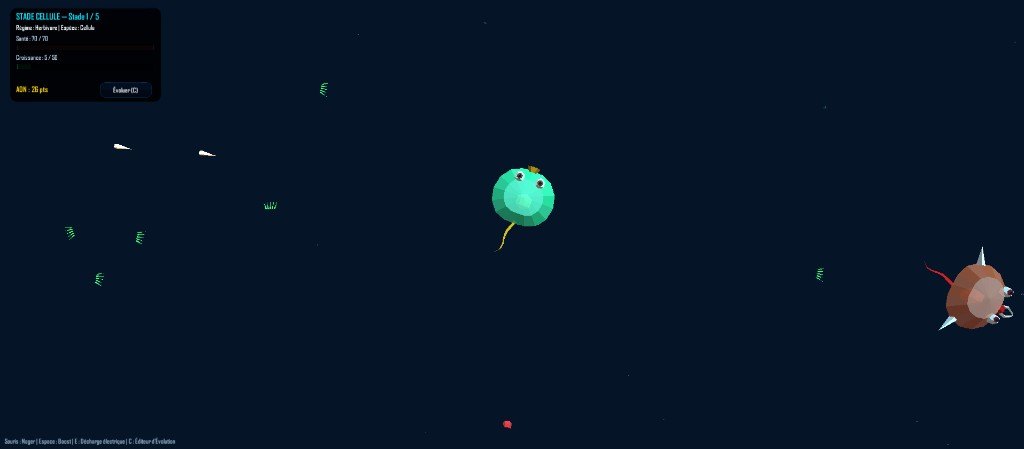
The primordial soup
The soup waits until you have read the opening. You start as a herbivore named Cellula, at stage 1, with 25 DNA, a filter mouth, a flagellum, and a pair of eyes. The mouse steers. The camera pulls back as the cell grows. Space, or the right mouse button, is a dash, and it spends the growth you have stored. E, or the middle mouse button, is a shock that hits the cells around you. C opens the workshop at any time.
What you can eat depends on the mouth you built. Six nutrients in ten are green plants, three in ten are red meat, and one in ten is a gold mote. A gold mote gives DNA to every diet, and it can unlock an organ you have not seen yet. The wrong food for your mouth is refused.
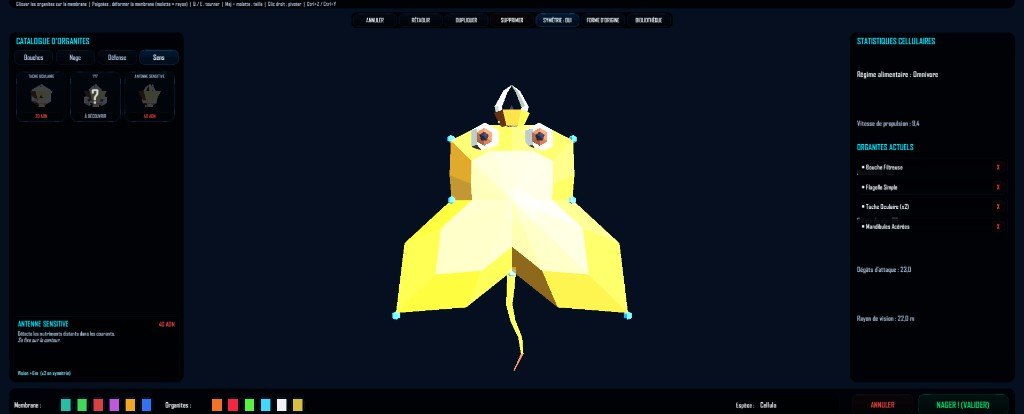
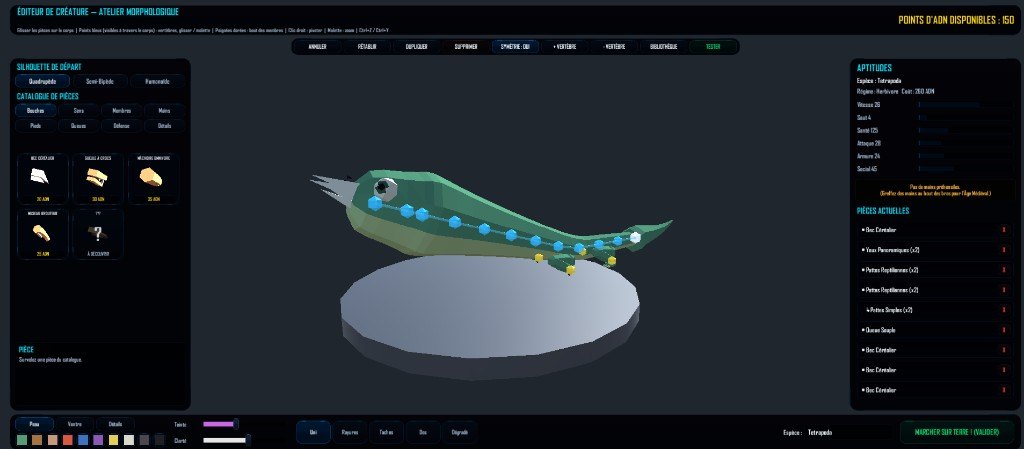
- Five stages in the water. The growth bar asks for 50, then 120, then 220, then 350. Each time it fills, that amount is spent, the stage rises, the body grows, health is refilled, and the workshop opens. You drag organs onto a soft membrane: a mouth, a way to swim, a spike, an eye. You pay DNA. An organ the soup has not shown you yet stays locked.
- Dying is not the end of the run. You lose a fifth of your DNA, rounded up. A three-second countdown plays. You come back with full health, the same body, the same stage, and the same growth, for two seconds during which you cannot be hit again. You are put back away from the other cells.
- Stage 5 opens the shore. The last bar asks for 500. Filling it does not raise the stage again. It offers the land. You leave the water once. After that, Play resumes the age your species has already reached.
A body, on your home planet
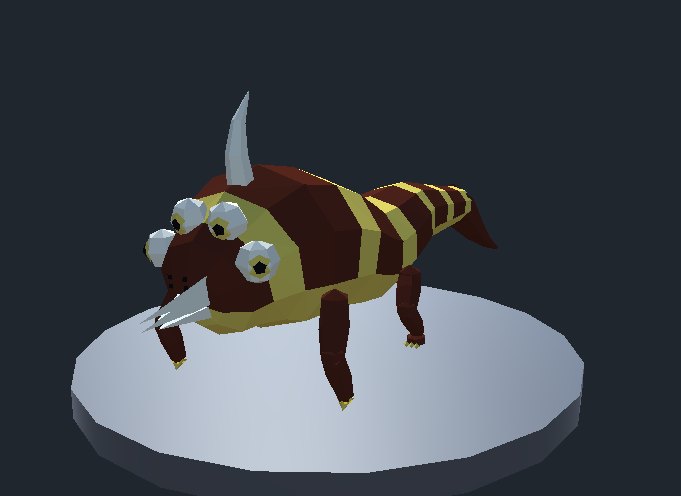
On the shore you shape a creature and then you live as it, on your home planet, with wild creatures around you. The workshop has a spine, a posture, and parts: mouths, senses, limbs, hands, feet, tails, defense, and details. The parts sit on the body. Herbivores flee when you come close. A carnivore does not.
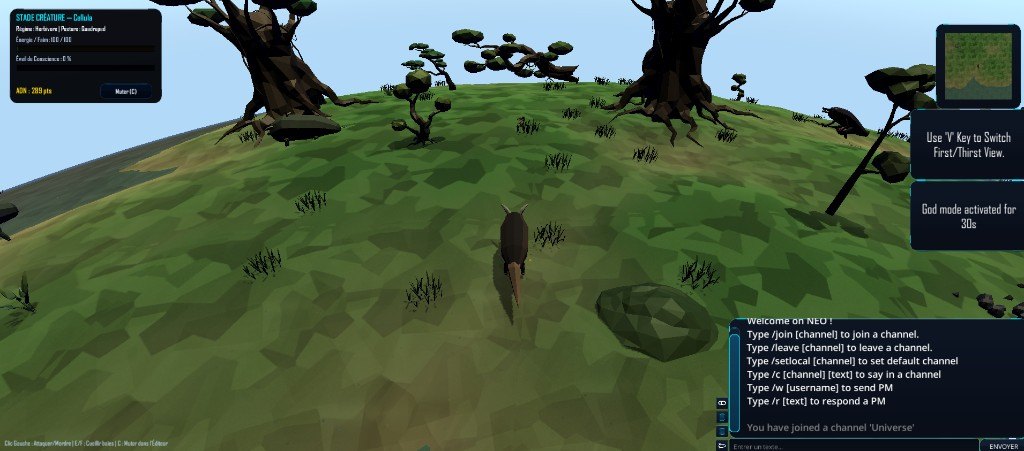
- Feed the body you made. Walk up to berries and press E or F. A strict carnivore cannot eat them. A left click hunts. If you are within 8 meters when the creature dies, the kill feeds every diet: 25 hunger, 20 DNA, and 15 points on the awakening bar. Hunger is the orange bar. Awakening is the blue one.
- The planet fights back, and it pays you. The body leaves a pile of bones. Searching it gives 10 DNA, and it can unlock a part you have not seen yet. If the body has a defense, Shift and the left click is a charge, and it hits harder than a normal bite. R spits, whether or not you built a venom part. If the body has wings, holding Space is a glide.
- Press C to change the creature while you live as it. Tab releases the cursor. You can keep designs in a local library.
Awakening
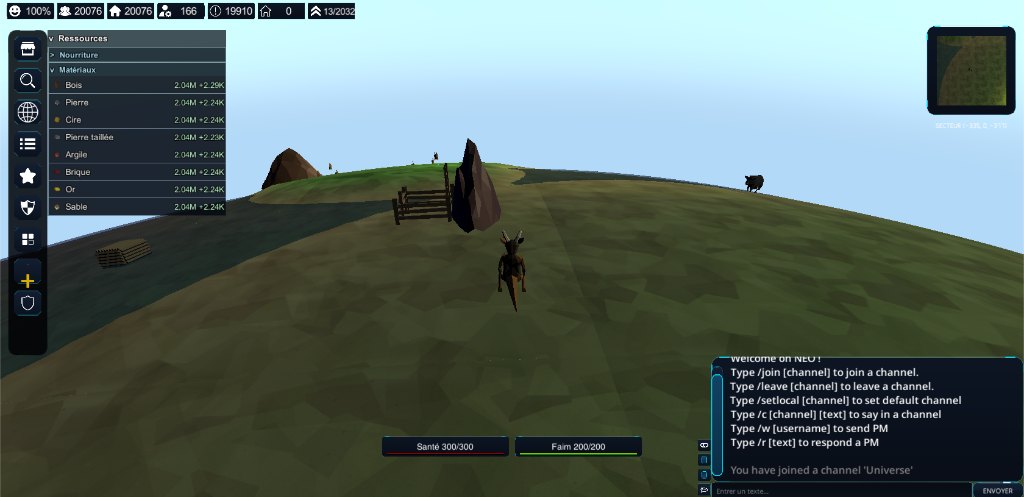
Civilization is earned. Four things have to be true at once. The awakening bar is full. The saved species is a biped humanoid. It has grasping hands. It has lived at least two minutes in the creature age. Then the Medieval Age opens. A world you already owned resumes, on the save you left. A new account awakens on a new planet. Until that moment, build, research, recruitment, ship orders, and empire settings stay closed.
If the station cannot read your age, you enter the soup and the save stays where it is.
Ground, roads, and what you build
Habitable, desert, rock, ice, and volcanic ground is redrawn as a seamless faceted texture, with new normal maps.
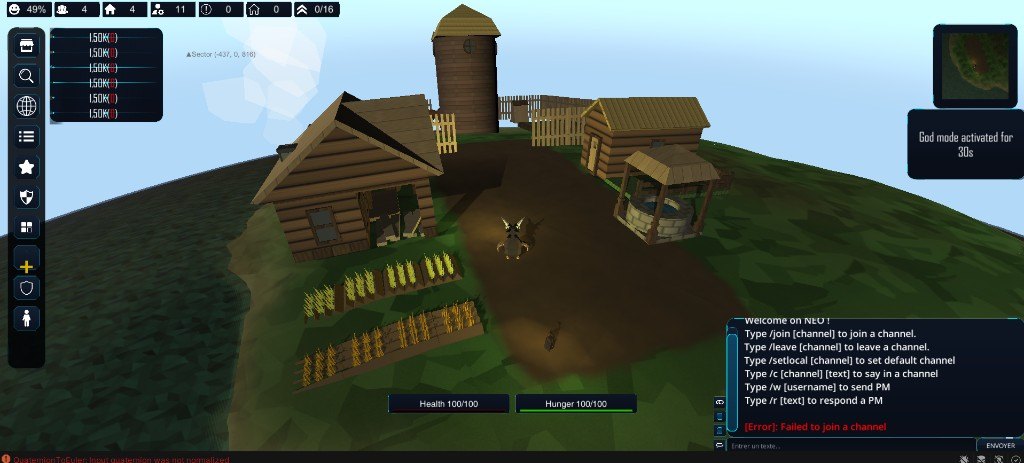
- Roads. A finished road is painted into the ground, in the color of its age. Up close, the props along that paint are the detail you see.
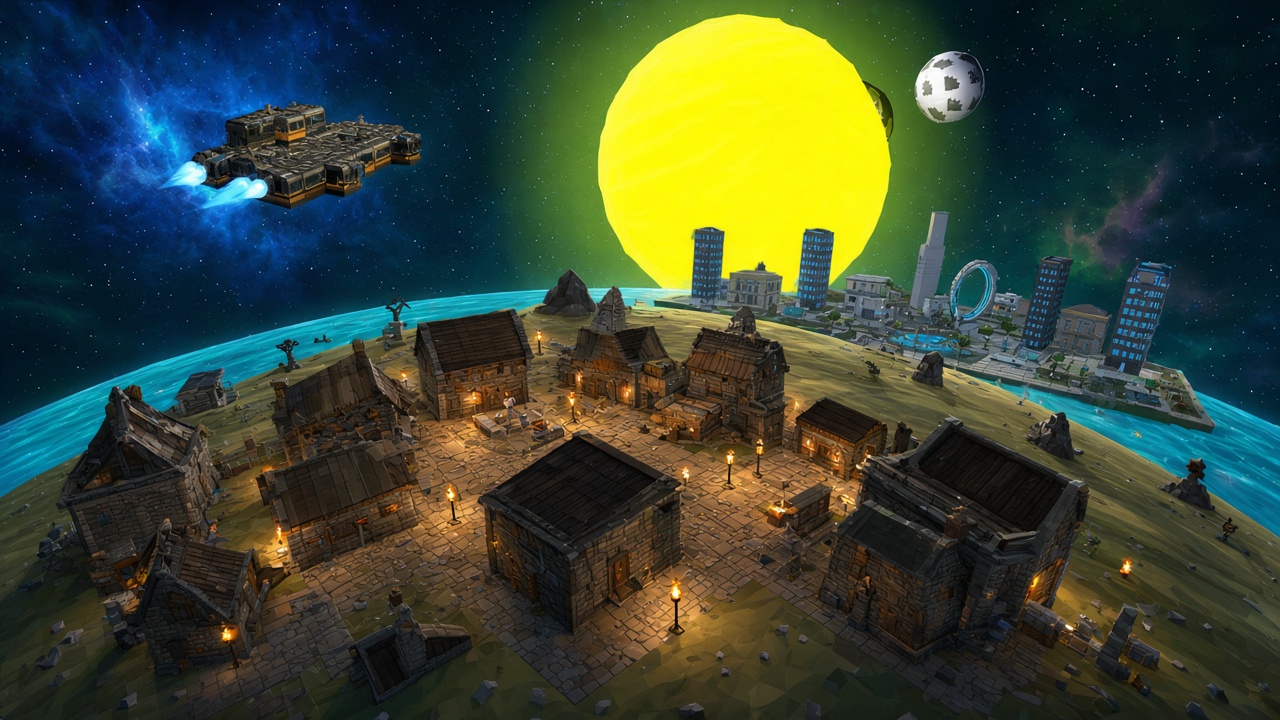
- Buildings. Medieval buildings use the faceted style, with brick, roof, log, and water on the surfaces those materials belong to. Advanced buildings have nanite plating, bevels, and rivets. Collective buildings are blue-grey, with a nanite texture. Many modern and future buildings are a little smaller. The modern mines are much larger. The medieval hunter and the medieval turret are smaller. Hydroponics and the residential ring are much smaller. The water tower is a little larger.
- Pieces you can place. Wool, plastic, and textile each have a block, a floor, a wall, a roof, and a foundation, in red, orange, yellow, green, blue, purple, black, and white. Plastic and textile pieces stay behind the research that teaches them. Advanced Hull and Nanite Hull are foundation sets: a door, a floor, a foundation, a roof, a wall, a windowed wall, and a block.
The station
The main menu is a glass bridge, with a painted horizon and the orbit in view. The line under the title reads: “One species. Three ages. A galaxy that remembers you.” The drawn diagram of orbits that used to sit on the sky is gone. The station log shows the news from the site. Quit is on the screen after you sign in.
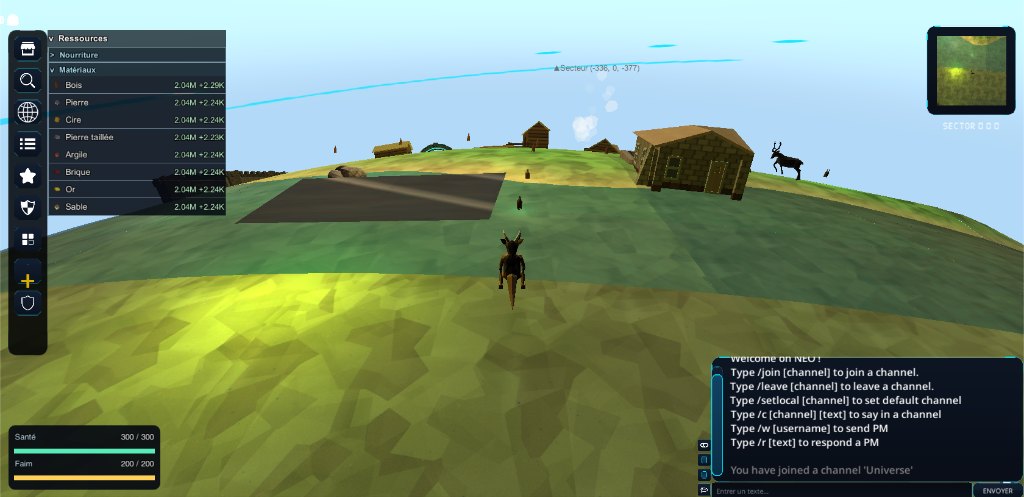
- The panels were restyled in the same dark glass. All forty resource icons are redrawn in the faceted style. The old skin button on the sidebar is gone. The resource dock can fold. Research stays hidden until you open it.
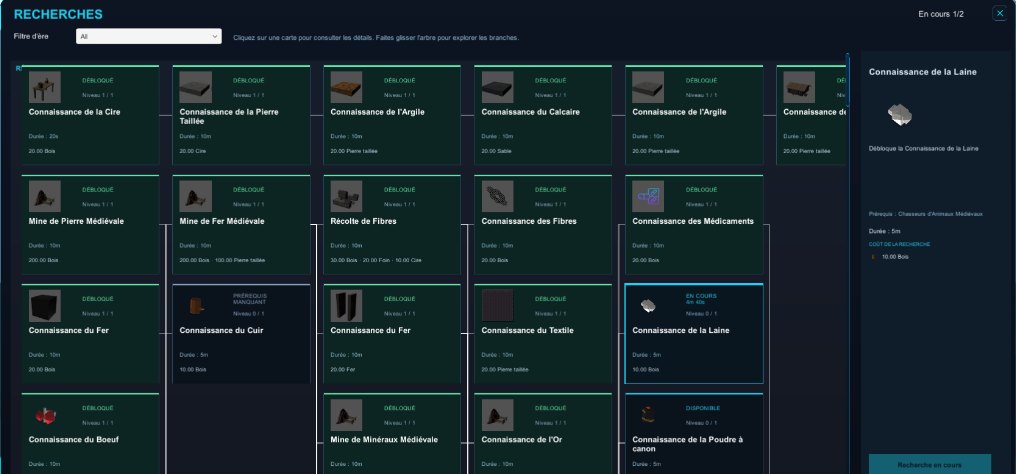
- Research is a tree. A locked entry stays on the board, marked as missing its prerequisite, and its card opens. You cannot start it. Drag to move around. The wheel zooms. Shift and the wheel scroll. An age filter fades the other ages. The card shows the cost, the time, and what it unlocks. The research you are running is marked on its card. Placing the first modern laboratory costs wood, water, cut stone, coal, and food, 5000 of each. It consumes 0.1 electricity and produces research points. The weather center has its own research, after Electronic Part: 4000 research points over ten minutes.
- Languages. German, Spanish, Brazilian Portuguese, Italian, Russian, Simplified Chinese, Japanese, and Korean. The French tutorial texts match the English file. Russian, Chinese, Japanese, and Korean use a font from your system, because the game’s own font does not cover those letters. The cell workshop and the creature workshop are in those files with the rest of the player text.
- Camera. In third person the pitch stays between 15 and 80 degrees, and the distance stops at 28. On a planet, on foot, scrolling out past that enters an orbit 80 meters up. The wheel then moves you between 10 and 180 meters above the ground. Scrolling in at 10 meters returns to third person. The orbit carries a light, so a plot stays visible after sunset. V, which you can change in Settings, switches first person and third person. In the orbit, V returns to third person. Opening the build menu leaves the orbit as it is. From first person, the build menu switches to third person for the placement, without saving that as your preferred camera. First-person pitch stays between 65 degrees down and 40 degrees up. Tab locks and unlocks the mouse, and that key is in Settings too.
Ships
- Designs can be saved on your account. A
.neofile on your computer loads as well. Saving to the account also keeps a copy on disk. The old upload to the website is gone. A design the server rejects is not kept. - Orders. Warp to a sector when a warp engine is installed. Jump to a sector when a jump engine is installed. A jump farther than 50 light-years is refused. Approach aims at a planet, or at the sun.
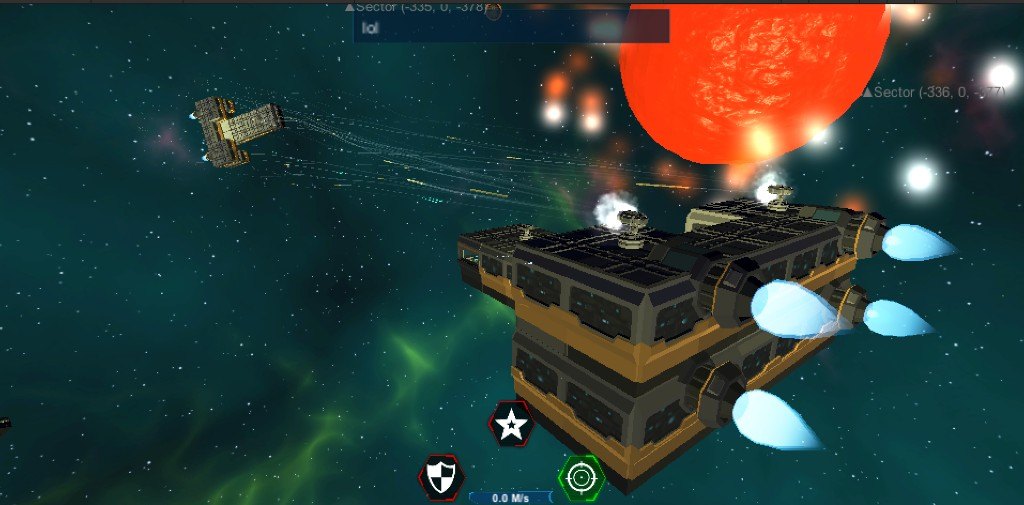
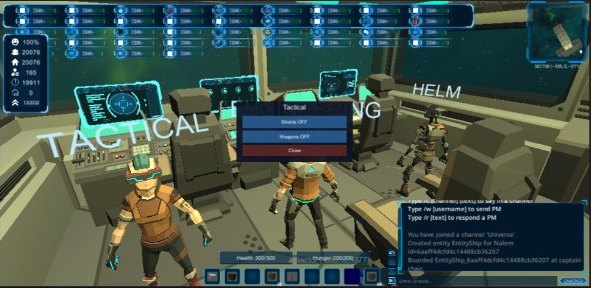
- The captain’s chair uses the movement keys from Settings. F sits you down and stands you up. Doors open with F when you stand next to them. The bridge crew answers in a speech bubble. You stand on the deck. A reconnect keeps you there. A warp or a jump takes the crew with the ship. If the trip is cancelled, you are set down.
Production, weather, and a few old stalls
Stocks keep rising while you play, and while the sector is closed. The numbers on screen climb at that rate, then snap to the real stock when the server sends it, including when you spend. Time away pays at most the last seven days. The count covers a whole empire when one of its sectors was visited during that week, and it covers you if you were active that week.
Pollen is 20 percent more food and a mood penalty of 20. A storm is 20 more wind. They apply to the people and the production on the planet where the event is running.
A few stalls from the previous build are gone. A burst of sector requests no longer freezes the station. The server no longer stops the world while the ground finishes its detail around you. If the climate reloads the planet under you, you stay alive and you are put back with the pilot, not left on a vehicle that just vanished.
Thanks for playing NEO! Stay tuned for more updates.
Nalem
Full changelog
Origin: cell, creature, civilization
- New. Play follows a saved age: cell, creature, then civilization. An account with no age on record, including an old account that already had a sector save, enters the soup. The sector save is not deleted. Civilization commands stay closed until awakening. After awakening, a saved world resumes. A new account awakens on a new planet.
- New. The soup waits until the opening is read. Default body: herbivore, species Cellula, stage 1, 25 DNA, filter mouth, flagellum, eyes. Mouse steers. The camera pulls back as the stage rises. Space or the right mouse button dashes and spends stored growth. E or the middle mouse button shocks nearby cells. C opens the workshop at any time.
- New. Nutrients are about 60 percent plants, 30 percent meat, 10 percent gold motes. Diet follows the mouth. The wrong food is refused. Gold gives DNA to every diet and can unlock an organ.
- New. Five stages. The bars are 50, 120, 220, 350, then 500. Each filled bar before stage 5 spends that growth, raises the stage, grows the membrane, refills health, and opens the workshop. Organs are dragged onto the membrane and paid in DNA. Undiscovered organs stay locked until the soup reveals them. Filling the bar at stage 5 opens the shore. You leave the water once. Later logins resume the age you have reached.
- New. Death costs a fifth of your DNA, rounded up. A three-second countdown plays. You return with full health, the same design, the same stage, and the same growth, invulnerable for two seconds, placed away from the other cells.
- New. The creature is shaped (spine, posture, mouths, senses, limbs, hands, feet, tails, defense, details), then lived on the home planet. Wild creatures spawn around you. Herbivores flee. Berries are E or F unless you are a strict carnivore. Left click hunts. A kill within 8 meters feeds every diet: 25 hunger, 20 DNA, and 15 awakening. Shift-click charges only if the body has a defense, and it hits harder. R spits with no venom part required. Space glides if the body has wings. Bone piles give 10 DNA and can unlock a part. C opens the editor during play. Tab releases the cursor. Designs can be kept in a local library.
- New. Awakening requires a full bar, a saved biped humanoid with grasping hands, and at least two minutes in the creature age. Then the Medieval Age opens. Build, research, recruitment, ship orders, and empire settings stay closed until then.
- Behavior. If the station cannot read the age, you enter the soup and the sector save is kept.
World look
- Rework. Habitable, desert, rock, ice, and volcanic ground textures and normal maps are a seamless faceted set.
- Rework. A constructed road is painted into the planet in its age’s color. Close detail is the props along that paint.
- Rework. Medieval building textures are a faceted set, with brick, roof, log, and water on the matching surfaces. Advanced buildings have nanite plating, bevels, and rivets. Collective buildings use a blue-grey nanite texture. Foundations use faceted textures.
- Rework. Many modern and future buildings are a little smaller. Modern mines are much larger. The medieval hunter and the medieval turret are smaller. Hydroponics and the residential ring are much smaller. The water tower is a little larger.
- New. Wool, plastic, and textile blocks, plus floor, wall, roof, and foundation, in red, orange, yellow, green, blue, purple, black, and white. Plastic and textile pieces stay behind their research. Advanced Hull and Nanite Hull sets: door, floor, foundation, roof, wall, windowed wall, and a block for each.
Menu, HUD, research, camera, languages
- Rework. The main menu is a glass bridge, a painted horizon, and the orbit. The drawn orbit diagram is gone. The tagline under the title is “One species. Three ages. A galaxy that remembers you.” The station log shows the site’s news. Quit is on the signed-in screen.
- Rework. In-game panels use the dark glass set. All forty resource icons are redrawn in the faceted style. The obsolete skin button is removed. The resource dock can fold. Research stays hidden until opened.
- Rework. Research is a tree. Locked entries stay visible, marked as missing their prerequisite, and the card opens. Drag pans. The wheel zooms. Shift and the wheel scroll. An age filter fades other ages. The running research is marked on its card. The modern laboratory is placed for 5000 wood, 5000 water, 5000 cut stone, 5000 coal, and 5000 food, and consumes 0.1 electricity. It produces research points. The weather center has its own research, after Electronic Part, at 4000 research points over ten minutes.
- Camera. Third-person pitch stays between 15 and 80 degrees. Third-person distance stops at 28. On a planet, on foot, scrolling out past that enters an orbit at 80 meters. The orbit wheel moves between 10 and 180 meters above the ground. Scrolling in at 10 meters returns to third person. The orbit has a light. V, configurable in Settings, switches first person and third person, and from the orbit returns to third person. Opening build keeps the orbit, and switches first person to third person without writing your camera preference. First-person pitch stays between 65 degrees down and 40 degrees up. Tab, configurable in Settings, locks and unlocks the mouse.
- Languages. German, Spanish, Brazilian Portuguese, Italian, Russian, Simplified Chinese, Japanese, and Korean. The French tutorial texts match the English file. Russian and the three East Asian languages use a system font. The cell and creature workshops are in the language files.
Ships
- Rework. Designs are saved on the account. A local
.neofile loads as well, and a cloud save also writes a copy on disk. The website upload is gone. A design the server rejects is not kept. - Orders. Warp to a sector with a warp engine. Jump to a sector with a jump engine, refused past 50 light-years. Approach aims at a planet or the sun.
- The captain’s chair uses the movement keys from Settings. F sits and stands. Doors open with F at close range. Bridge lines are a speech bubble from a role. Crew stand on the deck, stay through a reconnect, travel with the hull on a warp or a jump, and are set down if the trip is cancelled.
Production and weather
- Stocks rise while you play and while the sector is closed. The HUD climbs between updates and snaps to the server number, including when you spend.
- Time away pays at most seven days. The count covers a whole empire when one of its sectors was visited that week, and it covers you if you were active that week.
- Pollen is 20 percent food and a mood penalty of 20. A storm is 20 wind. They apply to people and production on the planet where the event is running.
Stability you can feel
- Fix. A burst of sector requests no longer freezes the station.
- Fix. The server no longer stalls while scenery finishes its detail around you.
- Fix. A climate reload of the planet no longer kills you. You are put back with the pilot, not left on a vehicle that just vanished.
Related articles
NEO: The Game – True Ground – Update 1.32.0
Hello everyone, This update is about living on a planet that behaves like a planet. Skies that were supposed to look different…
Read more →
NEO: The Game – Update v1.31.0: A Lighter Offline Empire
NEO: The Game – Update v1.31.0: A Lighter Offline Empire Hello everyone, This update is mostly about making the living galaxy cheaper…
Read more →
NEO: The Game – Update v1.30.0: Stronger Worlds, Safer Space
NEO: The Game – Update v1.30.0: Stronger Worlds, Safer Space Hello everyone, This update is a big one behind the scenes: we…
Read more →